
Complex and Organized, Shaders and Mourning the Craft of Coding
#092 Creative Coding / Generative Arts Weekly

Never to rush something I was creating, but instead let it come into being as if it had a soul of it’s own. A. Hoffman
Wowza.. its been a while again.
Hope you all have had a great summer. Here school is starting back up for most and thus I thought it would be a good time again to start.
AI Keeps Progressing…
Much of my summer has been working through a bit of the sorrow knowing the craft of creating interesting art / tools won’t take years to master anymore as the frontier LLMs progress at unprecedented rates.
Its like a losing a special friend..
knowing that what took years to get good at has now become accessible with words. Granted words expressed in English rather than conceptual constructs.
Of course… LLMs and their “great intelligence” have been trained on the concepts synthesized on the knowledge and learning of many others before them.
A glorified ZIP file that speaks.
Yet, there will come a day when being nourished by this behemoth and the lights are out.
Mental agility and creative capacity will always be a thing.
So though I mourn the idea of people learning to write code.
I think humans still need the challenge of thinking outside of the box and that is where innovation will continue. Yes we have synthesized much of the internet as it was.. but now we have a step change that I do hope will bring new ideas that have yet come..
What is the next Perlin / Simplex noise that get spun out from experimenting with artificial intelligence? No not in the generative diffusion.. but what interesting concepts can be put together to create other emergent behavior? Is there another cellular automata axiom that is yet to be found.
There have been a number of cross discipline innovation examples and forgotten ideas (Mendelian genetics)
That is where I am hoping the next stage / era of creators use these tools for idea ideation, speeding up knowledge acquisition, mastering mind bending concepts through personalized to your learning we will gain novel and interesting.
Just lets not become characters in Idiocracy …
Yes some days I just wonder but yet I also know so many great people that it will still take alot to pilfer humanity from hitting rock bottom in that way.
Let’s just not get sucked into the black hole of doom and just simply create.
I know that AI seems to be the only thing we hear about in these echo chambers fabricated by the attention grabbing mafia that controls the internet.
So just a few things I’ve lately found useful.
Find community outside of the internet.
Or at least find the small islands on far away planets to find interesting meaning and conversation.Get a copy of Feynmann’s lectures
Reading a book and processing the information as a starting point can always remove the social druggery. Plus it helps keep pushing the muscle of complexity (so your brain doesn’t become too mushy)Create..
I’ve been using alot of other materials than just code (i.e. electronic components) - I’ve been working with some “breathing” LEDs that I want to use to “animate” a quartz I found at the beach a couple years ago.Drown the noise.
I’ve just turned off news. It doesn’t bring much benefit. If it’s big enough someone will let me know.Get to know it.. just don’t let it control you.
I might sound as though I don’t like AI. I just think that AI is a tool that has made it easier to search Github, Stackoverflow, Reddit, and Google more concise.
I think the challenge for us is that we should be able to use it to make much more detailed and even more interesting results.
All right! Hope you all are doing well and thank you for sticking with me even in winter.
Best,
Chris
Emergence from Simplicity
Tom Mohr explores emergence from a couple simple rules, particle attraction and repulsion built upon complex systems to create lifelike structures and using color-coded interactions to generate interesting behavioral phenomenas driven by the simplest forces and physics.
This has been out for a number of years at this point but it is still an incredible thing to watch.
This is a bit more technical but high level on just educating on what Emergence is and how it happens and what are the rules that govern these mechanics.

ASCII Rendering
The following post from Alex Harri does a really good job in going into the details to understand ASCII rendering at a technical level. Everything from graphics, to example code, to math he has it all here and probably one of the best examples / write ups I’ve come across on ASCII rendering.
PShaders: An Introduction to Shaders
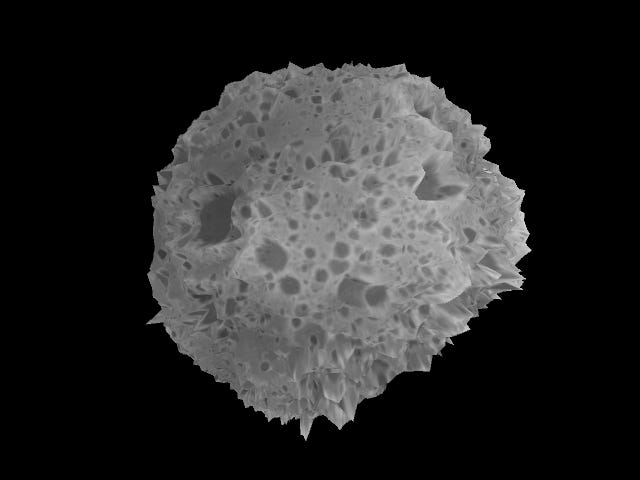
Shaders are powerful and portable graphics programs, written in GLSL (OpenGL Shading Language). This language, and its integration into Processing and other graphical frameworks, provides endless opportunities for powerful and optimized graphics techniques that can expand creative possibilities and make common practical tasks easier and faster. These range from post-processing effects, advanced compositing, generative drawing, custom control over the geometry, materials, and lighting of 3D shapes, and beyond. Shader technology originates in video game graphics — every lighting model, particle effect, and post-processing technique in modern games relies on the same GPU pipeline — and creative coders have adopted these tools to make art.
A great Github resource from cacheflowe on how to use shaders using PShader from p5js; The computation layer and interface to all things graphics.
Exploring and Understanding Light in Computer Graphics
A great hour interview on just how light works in computer graphics; particular how Taha Torabpour (Substack) uses it in his graphics engine and just more of the back story on how it works in a bit more detail.
Crystal Growth in Blender
A tutorial on how to grow crystals in Blender
If you are more in the node programming mindset; here is a great little tutorial I came across on building this growth making.
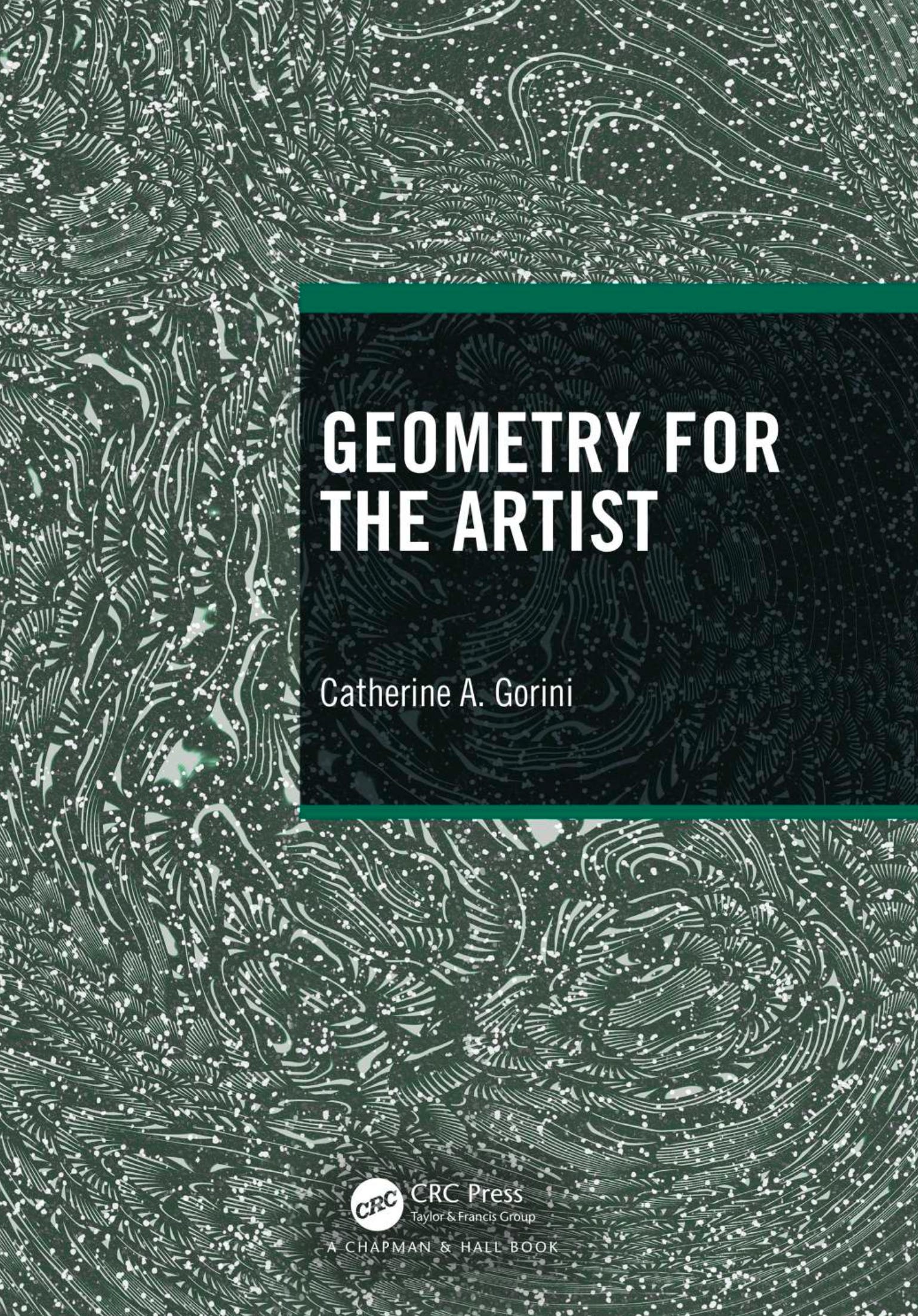
Geometry for the Artist
is based on a course of the same name which started in the 1980s at Maharishi International University. It is aimed both at artists willing to dive deeper into geometry and at mathematicians open to learning about applications of mathematics in art. The book includes topics such as perspective, symmetry, topology, fractals, curves, surfaces, and more.
A great study on just how geometry can be used to create incredibly interesting shapes from history. Throughout the book historical art pieces from all sorts of periods are used to make points of the pieces.