
Pure Data, Hinged Dissections, and Open Source Computational Design
#091 Creative Coding / Generative Arts Weekly

Being creative is all about activating your craziness for the good of others. It is all about thinking outside the box. -Olawale Daniel
It’s been a while.
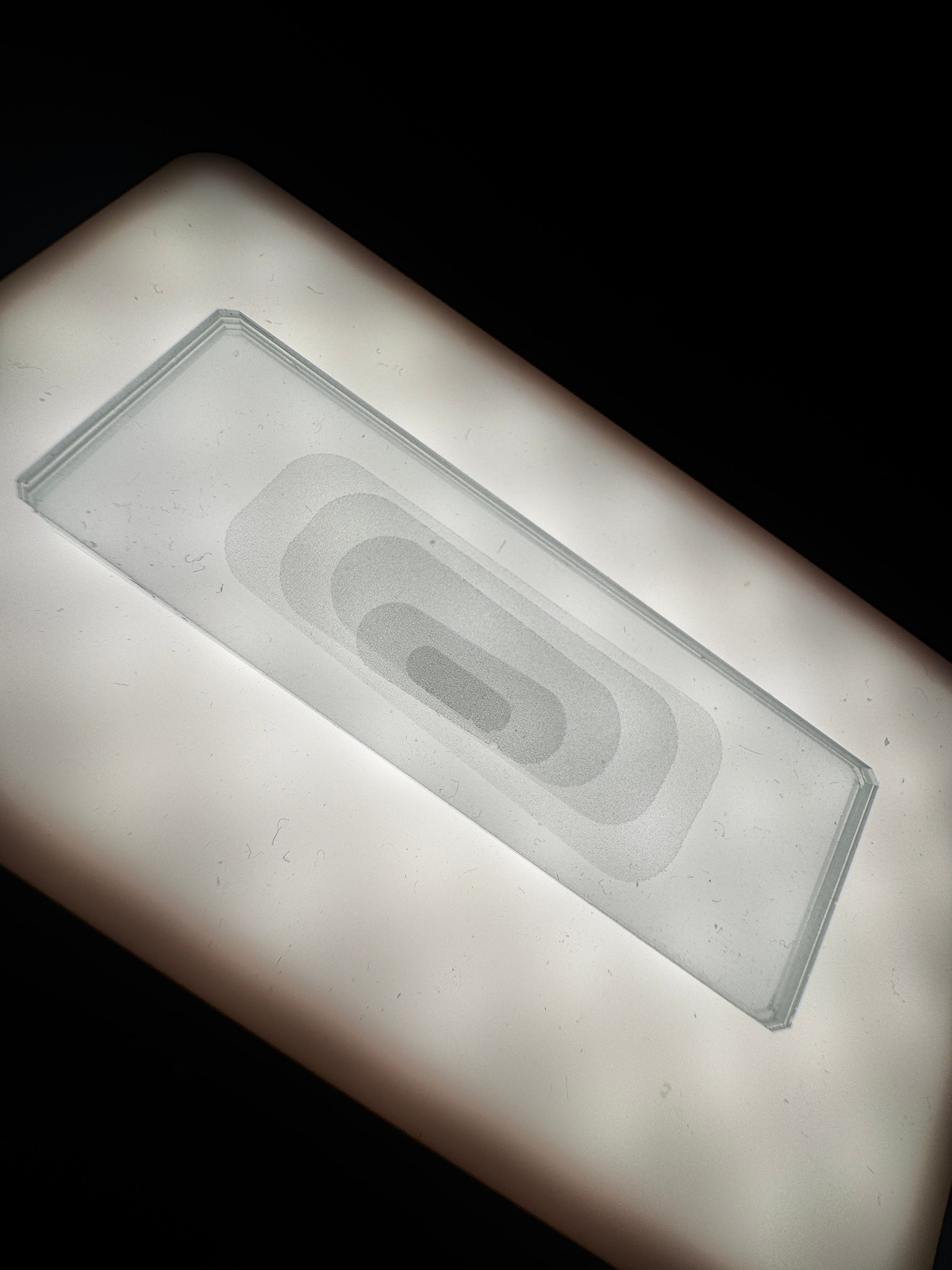
Lately I’ve been working with a bunch of materials that I am putting under my laser cutter. (Birch wood, Leather, Slate, Glass(
Right now it’s really to calibrate and start thinking through some of the generative projects that I’ve been wanting to accomplish.
Strudel
I’ve also been taking the last ~30 days to create little musical sketches using the Javascript library Strudel which has been fun. Some of my favorites have been this, this, and this. Nothing earth shattering but just a great way to keep the creativity flowing.
Interesting Lectures
Every year I post a little about the lunch lectures that are hosted by the future sketches lab at MIT by one of the graduate students of the lab of Zach Liebermann, Jessica Stringham (ig: _thisxorthat). This year the theme was Creating With Nature which is always a great way to get exposed to other artists, technologists, designers in the space. This year the lecture that stood out to me was David Rothenberg as philosopher and musician, he interacted with the nature around him and uses these materials in his projects. One of his projects he plays the Oboe and preforms with the European Starling in Berlin which just brings up questions on how our interactions with the world around us are left unnoticed and could open new worlds of experiencing the living around us.
I’d recommend taking the time to watch as there are a number other speakers such as Jer Throp, Nervous System, and Nathalie Miebach. Not all of these presentations have been uploaded to see but will be up there in due time.
I hope you all have a wonderful week!
Tutorials & Articles
Icône 2020 - In honour of Vera Molnar
Francesca Franco speaks about a piece she was able to curate with some of Murano’s glass artists and Vera Molnar. I hadn’t come across it and thought more of you all probably would appreciate this as well.
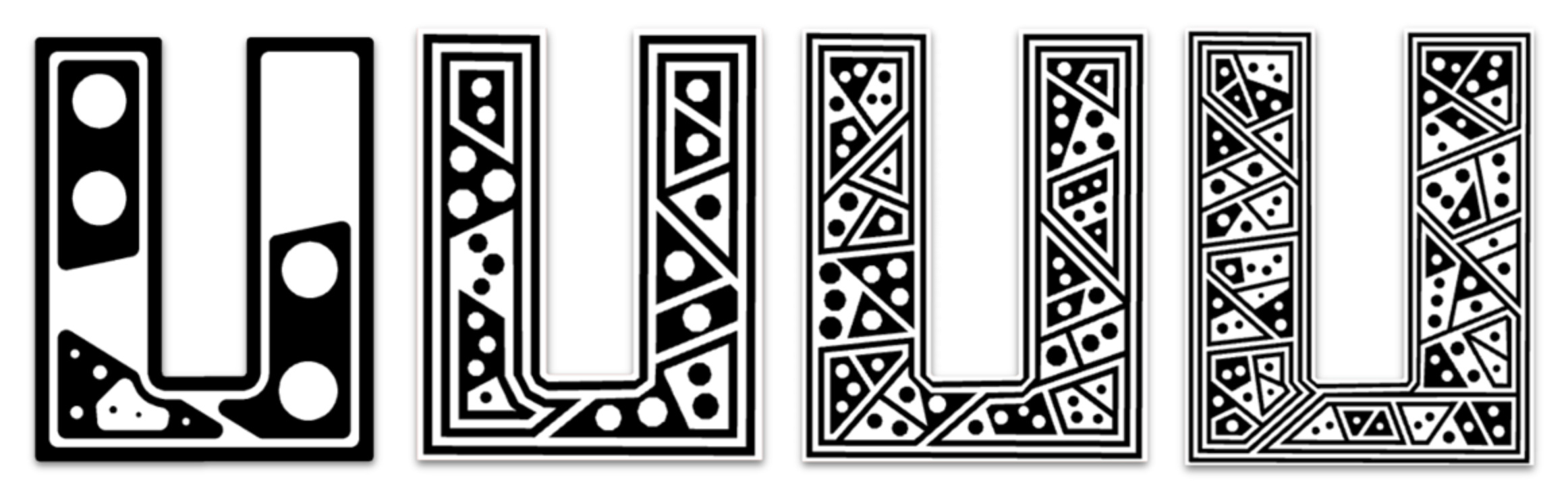
Claycode: Stylable and Deformable 2D Scannable Codes
Claycode is a novel 2D scannable code designed for extensive stylization and deformation. Unlike traditional matrix-based codes (e.g., QR codes), Claycodes encode their message in a tree structure.
It doesn’t cease to amaze what others will come up with. I was looking into what it would take to create alternative QR codes. But this was really fun to see.
Envion
Envion is an ecosystem in Pure Data designed for algorithmic and procedural composition, musique concrète, and experimental sound processing. It includes tools for slicing, dynamic envelopes, texture generation, and multi-channel management.
PureData has been a long standing sonic engine. The following project is a number of templates and components built on top of the sound processing engine of PureData and using sonic elements.
Open Source CDFAM - Aaron Porterfield
In this deeply personal and wide-ranging talk, industrial designer Aaron Porterfield reflects on his path from early explorations with BASIC and Blender to founding F=F (Form Equals Function). Aaron shares how a childhood without video games led to a lifelong fascination with design tools, parametric modeling, and open-source collaboration.
From early contributions to the Blender Foundation and experiments with lattice hinges and origami tessellations to impactful work on custom 3D-printed medical devices, this talk traces the evolution of his design thinking. Aaron walks through highlights including:
Found the following inspirational and thought it is worth sharing this generative design talk from CDFAM. Really appreciated the rigid body lattice work that shows up about 1/2 through the talk. I’ve yet to cut these forms, but its already to be cut as soon as my cold goes away.
Interactive Video Projection Mapping with Three.js
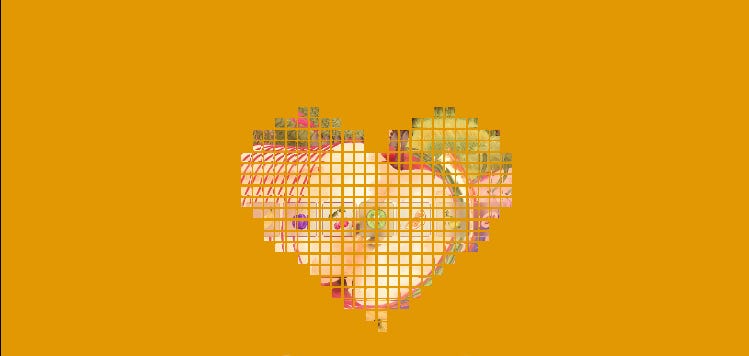
Projection mapping has long fascinated audiences in the physical world, turning buildings, sculptures, and entire cityscapes into moving canvases. What if you could recreate that same sense of spectacle directly inside the browser?
With WebGL and Three.js, you can project video not onto walls or monuments but onto dynamic 3D grids made of hundreds of cubes, each one carrying a fragment of the video like a digital mosaic. Many will surely recognize this effect from Rogier de Boevé’s portfolio, which gained wide attention for showcasing exactly this approach.
Strange Attractors in SVG
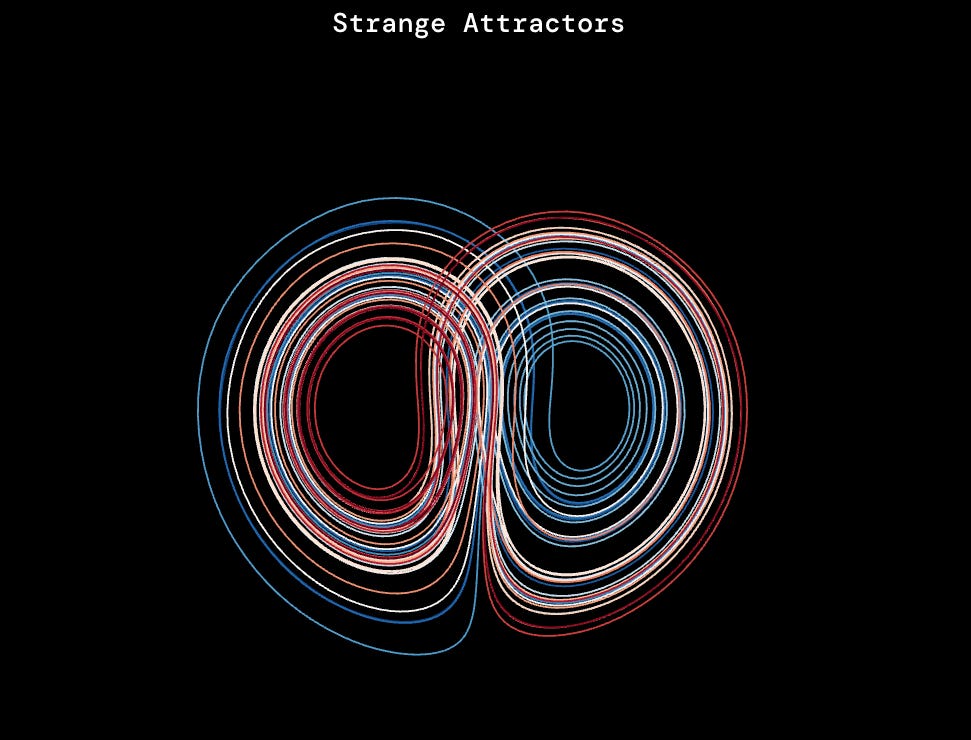
In dynamical systems, an attractor is a set of states towards which a system tends to evolve for a wide variety of starting conditions. Consider the pendulum as a simple example for such a dynamic system. Once set in motion, it will gradually lose energy due to friction and eventually reach the resting position again. In other words, the pendulum’s state is pulled towards its resting position - the attractor of the system.
Strange attractors aren’t anything new but the implementation on the Ethereum blockchain is an interesting aspect. i hadn’t come across it but I do find it to be interesting to read through how this is actually produced by the Solidity contract(s).
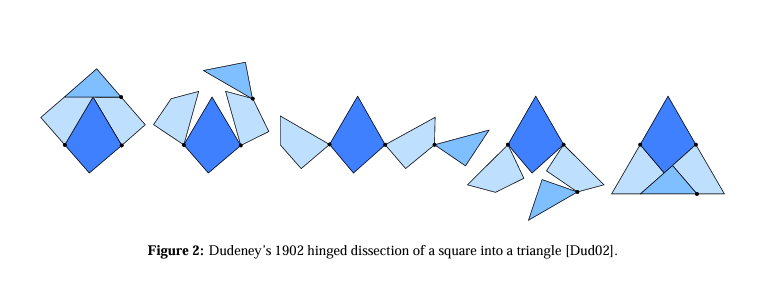
Hinged Dissections Exist
We prove that any finite collection of polygons of equal area has a common hinged dissection. That is, for any such collection of polygons there exists a chain of polygons hinged at vertices that can be folded in the plane continuously without self-intersection to form any polygon in the collection. This result settles the open problem about the existence of hinged dissections between pairs of polygons that goes back implicitly to 1864and has been studied extensively in the past ten years. Our result generalizes and indeed builds upon the result from 1814 that polygons have common dissections (without hinges). We also extend our common dissection result to edge-hinged dissections of solid 3D polyhedra that have a common(unhinged)dissection, as determined by Dehn’s 1900 solution to Hilbert’s Third Problem. Our proofs are constructive, giving explicit algorithms in all cases. For a constant number of planar polygons, both the number of pieces and running time required by our construction are pseudopolynomial. This bound is the best possible, even for unhinged dissections. Hinged dissections have possible applications to reconfigurable robotics, programmable matter, and nano-manufacturing.
Hinged dissections (here if you want to know way more) are a collection of shapes that are connected by hinges so they can swing from one shape to another. The paper here is more of a geometry problem than anything but has some interesting application to when creating 3D printed works, or any visual work that may provide some inspiration.
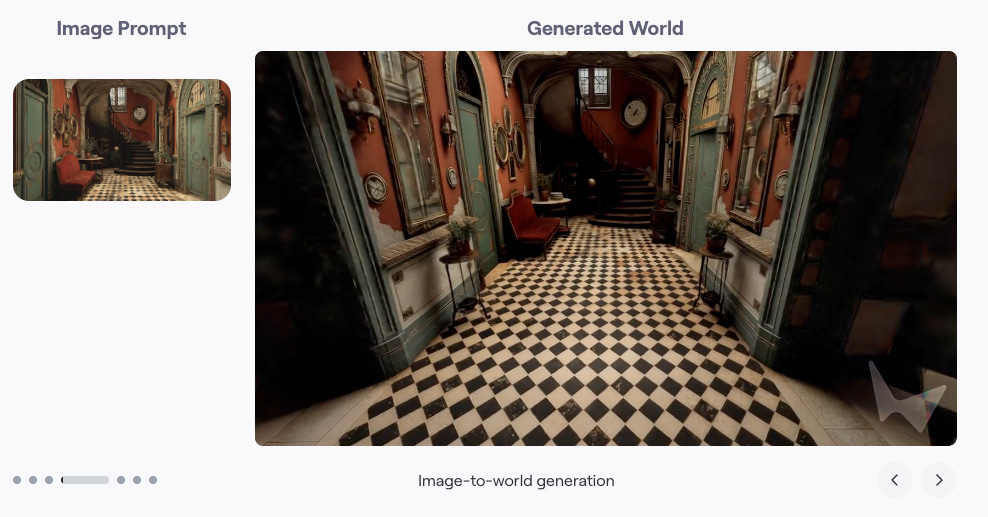
Text and Image to World
Spatial intelligence is the next frontier in AI, demanding powerful world models to realize its full potential. World models should reconstruct, generate, and simulate 3D worlds; and allow both humans and agents to interact with them. Spatially intelligent world models will transform a wide variety of industries over the coming years.
So from the company started or founded by Fei-Fei Li who was heavily involved in much of the deep learning research in the 2010s. The work they do is generate 3D world models (think a Midjourney but for entire 3D worlds). I believe right now its just a geometry + texture that is spit out by the model however a number of interesting applications that come from such a model.
Website | Instagram | Youtube | Behance | Twitter | BuyMeACoffee | Patreon
Didn't expect this take on creativity, but Olawale Daniel's quote really hit home. "Activating your craziness for the good of others" is such a cool way to put it! Totally reosnates.